
Kanar: An Overview
Kanar is a language and form of writing whose origins extend back to the ancient kingdoms and city-states that existed well before Batu became an established tribe. The Batu were largely illiterate, and Kanar had survived from its earlier period primarily as tool in divination and shamanic work. By the time of Mogai in the Late Period, the histories, mythologies, and fables had been relegated entirely to their oral tradition and writing as means of documentation was all but non-existent. It is easy to assume that Kanar would not have survived at all if it were not for the enormous number of petroglyphs left inscribed in stone from the Early Period when the Batu first settled within the valley of Kamaria.
Kanar as a spoken language is known today only through innumerable translations of its written form, passed down over the centuries. It can be assumed the language spoken in the Late Period of Mogai had, even then, degraded markedly from its original, which had been literally written in stone. The petroglyphs, however, not being commonly known by the average Batu of that time, cannot indicate with any certainty the specific forms of spoken Kanar that may have existed at that time.
Furthermore, since not a single original inscription of Kanar has survived into modern times, we are entirely dependent on the endless translations and transcriptions of kanar glyphs. This has the effect of being a mirror of the many cultures it has passed through; as much if not more than of the Batu themselves. Thus, Kanar is replete with linguistic influences spanning the continent.
It is often noted that the glyphs have two dental “clicks” within the grouping of consonants, which has commonly been argued as being evidence for Kanar’s relation to modern day Khoisan languages. Such claims, however, are dubious at best and ignores its many other more subtle impurities. At the end of the day, Kanar’s precise relation to contemporary languages will likely forever remain inconclusive.
The written form of Kanar, as we now have it, exists on four levels.
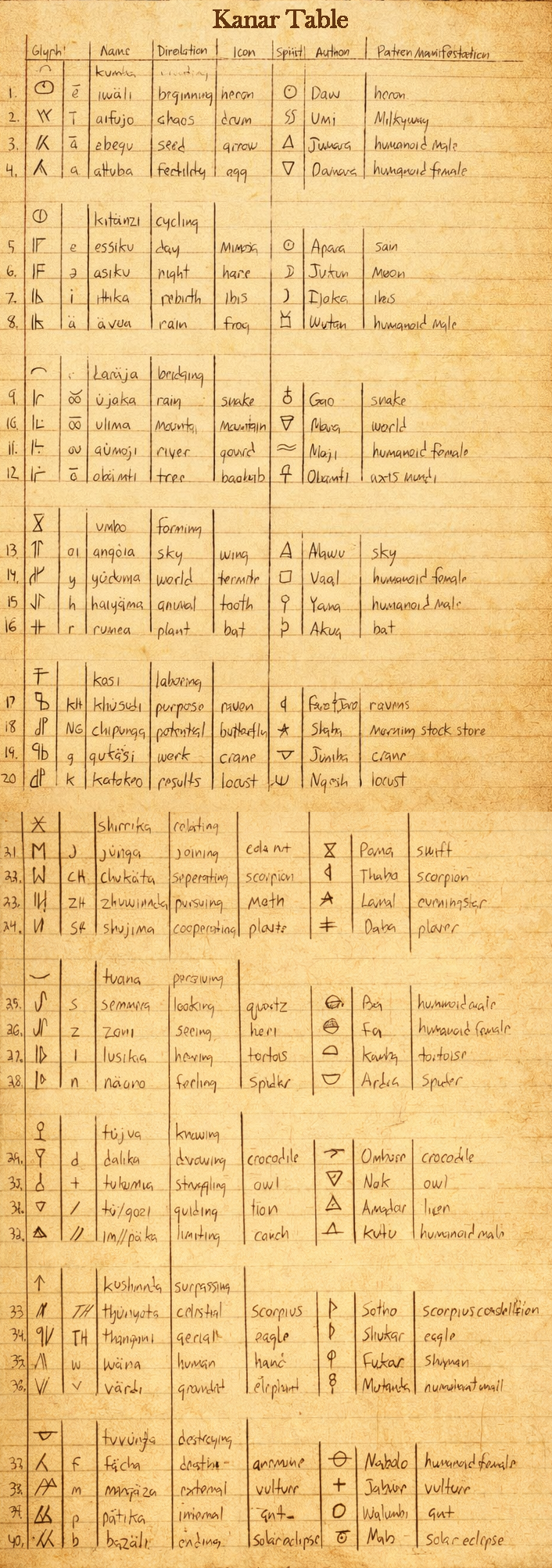
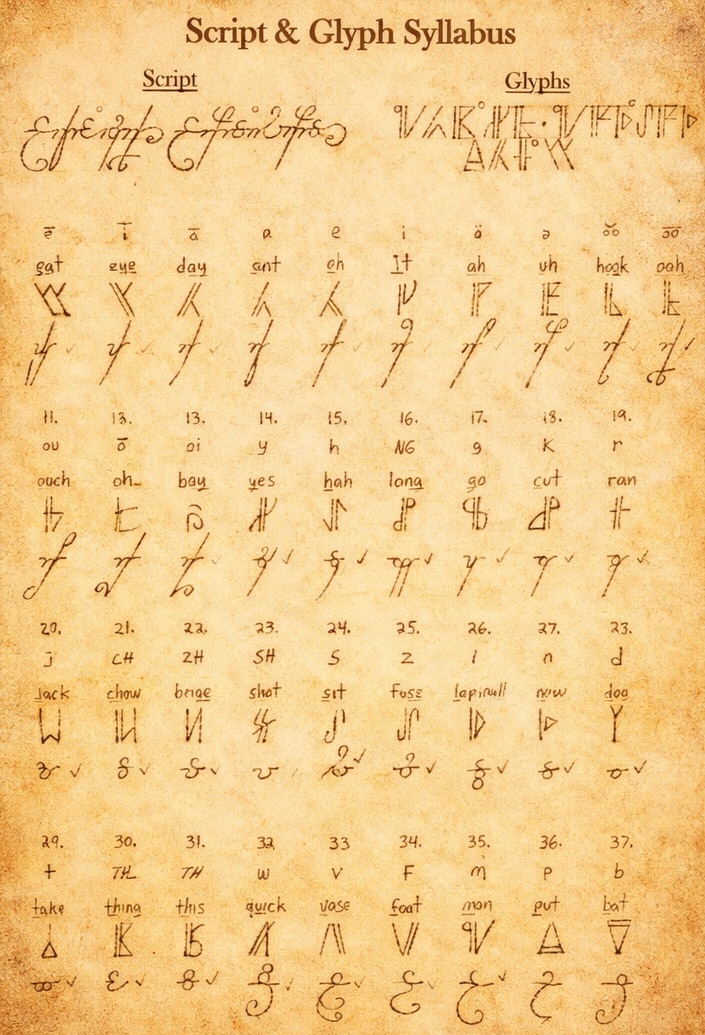
On the surface it is an alphabet comprised of forty glyphs arranged sequentially by four groupings of vocal construction: vowels, glottal, soft palate (including dental), and labial. On this level, each glyph is strictly phonetic, representing a precise sound. This results in an extension of our familiar five vowels to thirteen, with twenty-seven consonants.
The second level explores the name of each glyph and their literal translations. On this level the forty glyphs are segregated into ten groupings of four. The glyphs are not only grouped according to structural similarities, but also thematically according to their translation. These theme groups progress linearly from Creation on through to the last group, Destruction, where the process of life culminates in death. Though the last glyph being the inverse of the first suggests a continuity from the end back to the beginning.
The third level involves the interpretation of each glyph as it is used in divination and shamanic talismans or amulets. The glyphs in this context are attached to various objects, either through inscription or paint, and their individual meanings are amplified through ritual and interpreted in relation to each other in a specific framework.
The fourth level identifies the animal spirit, power object, or element that is associated with that glyph. These associations are derived from Batu mythology and are instrumental in oracular visions, and to a much greater extent in the deeper work of the shaman’s spirit journeys.
Kanar

Pronunciation & Orthography
The Kanar pronunciations provided in this text should be thought of as approximations. As with many other languages, Kanar had its own particular ways of forming speech sounds that were at one time quite alien from what is found in English today. The sound of the spoken Kanar is oddly bi-polar – lilting and gentle for one or two phrases, then jarring and percussive with tongue clicks and glottic pops.
Even among the Batu themselves, Kanar had its own distinct regional dialects. The Kanar spoken among the Judhar band far to the south differed in significant ways from that spoken among the northern band of L’Norien. And even among the three bands situated closer together in the north, there remained differences in pronunciation that were quite noticeable.
That being said, their variants would have posed no difficulty whatsoever for intercommunication between all four bands.
An additional complication, in terms of pronunciation and orthography, stems from the fact that many foreign words have been assimilated into the Kanar we know today. This is primarily dur to the nature of the oral transmission, followed only much later by written transcriptions and their countless translations down through the ages.
The linguistic pollutants within the Kanar we have now are easily detected and identified. Derived from various Bantu languages of central Africa, along with some minor Arabic influences, the original Kanar language has been largely obscured and Banuized over the years. There are many existing variations in Kanar spelling and pronunciation today – all hotly disputed and championed by their defenders within Batu scholarship – yet none can ever hold any claim for being pure Kanar.
The pronunciation and orthography used in this text is based on, and preserves the best aspects of, prevailing transcriptions, while at the same time adopting simplified conventions to accommodate the linguistic comfort zones of the modern reader. There are two notable exceptions to the simplified conventions, which can be found in the eighth set of the Kanar table. Glyph numbers 29 (tu/lika), and 32 (im//paka), represent two of the click sounds that are still common characteristics of moder day Khoisan languages of Africa. Both sounds are produced by an ingressive air stream when the tongue is drawn sharply away from various points of articulation on the roof of the mouth.
Tu/lika is represented symbolically by a single forward slash (/), and is a dental click producing a sound one might make today as a mild reproach (tsk, tsk). Im//paka is represented by two forward slashes (//), and is a lateral click producing the sound we might use to urge on a horse.
There is evidence to suggest that Kanar originally had many more such sounds, which were no doubt filtered out over the centuries through the Bantuization process already mentioned. The placement of the two surviving slick within the Kanar table cannot be completely ignored, however, since their symbolic significance in divination practices and Batu mythology are intricately woven into the fabric of their culture. But for the non-linguist, Kanar may be easily pronounced by simply dropping these two clicks, so their use is not included in any transcriptions provided within the text.

Kanar: Characteristics of Note
There is no word for I or me. The Batu always speak in the collective, even when speaking to a single individual. Communal values mean that a person is always part of a greater collective and is never alone and speaking just for her/himself.
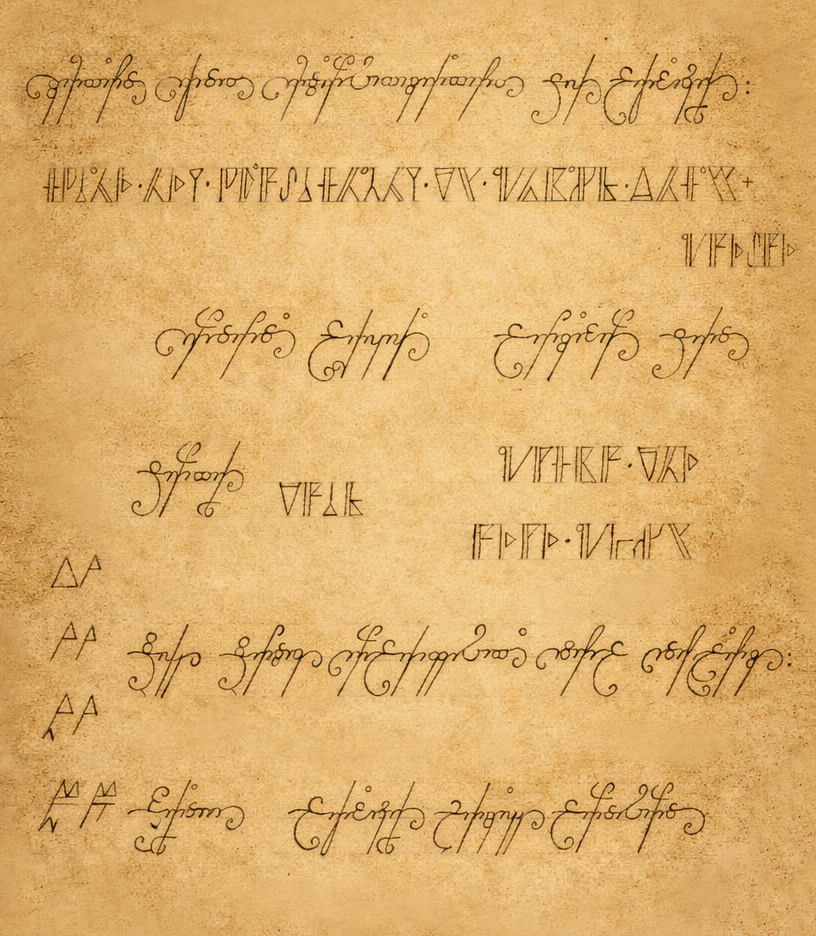
Kanar Script: written in henna on anima l hide, the forms carry within them the exact inflection, tone, volume intended by way of stem length, size of the form, and expressive bow flourishes. These linguistic subtleties are to accurately portray the original feeling, as in musical notation, and the personality of the speaker. Each form has a non-fixed value intended to convey all the linguistic nuances of speech. Kanar is a self-authorizing language – if you’re knowledgeable enough to read it, you’re permitted to know what’s being said.
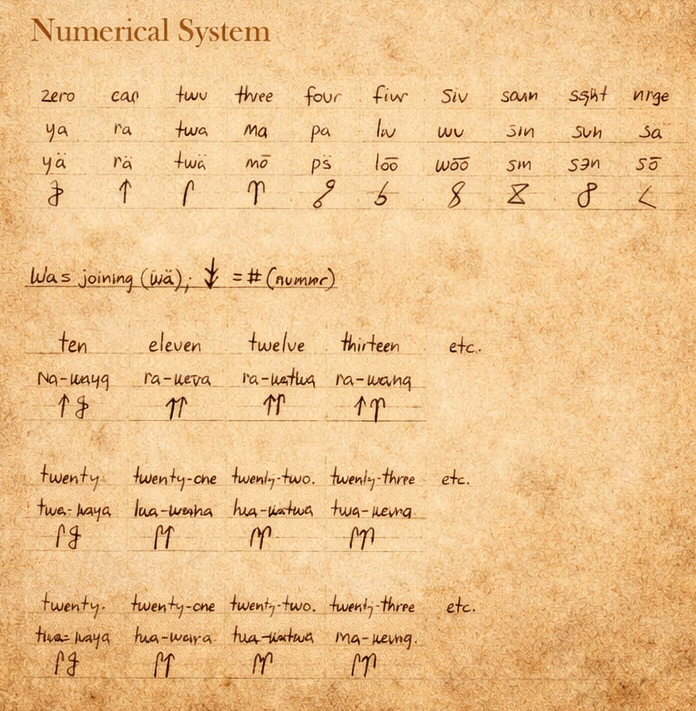
Numbers & Counting: Aside form the educated jola, most Batu can only count to 7, beyond which the number is referred to as many. If confronted to report on larger numbers they become tense and complain of headaches, avoiding the answer, or simply ignoring the inquiry. The jola initiates, however, use a fully developed base 20 numerical system that has been passed down from the earlier city-stat civilization their culture devolved from. Evidence of this has been the discovery of counting sticks – baboon’s thigh bone marked with numerous notches. These resemble calendar sticks used today by bushmen clans in Namibia.
Hand Signals: Rudimentary sign language was used by hunters for stealth communication.
It is said… was a common expression, linking teachings to ancestors.
The script form of Kanar is almost always restricted to spells, medicine, recipes, etc. The petroglyphs are for records, histories, and stories. Script therefor can be said to be for the arts and the living, written on flexible and transitory animal hides. Whereas the glyphs are dead, set in stone, and permanent, concerned primarily with the past.
The same word for animal also means meat. See: Yama.
The script forms are each morphologically related to their corresponding petroglyph forms.
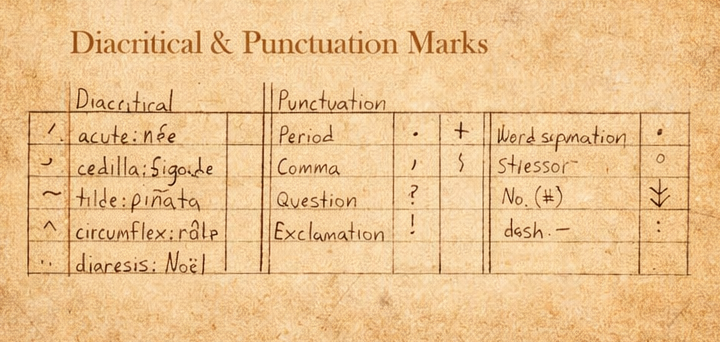
The diacritical mark of a small circle is placed above and between syllables to indicate the stressed syllable.
Tally Sticks: Marking notches in bone or on sticks is used to record pregnancies, to keep track of lunar months, etc. The final month of pregnancy is known as the month of the staff, referring to the staff used to notch the days of a pregnancy.
Black ink made from the sap of a bodie tree may at times be used instead of henna in the script forms. The ink is water soluble. Used whenever the purpose is not of a spiritual nature.
Kanar glyphs and forms are signatures of primary impulses and their qualities. They are qualities that existed before manifestations took place.
Henna is used with the script forms instead of black in when writing spells or medicine for women. The henna dye represents menstrual blood and is thus confined to the feminine aspect and uses of magic and medicine. Black ink is reserved for men. The amori may use either. Blue is reserved for the most sacred and spiritual writings, beyond gender. It is associated with water, sky, the blue flame, and the spirit-soul known as kra. Like with the flame of a candle, blue is rarely seen and at the inner core, red is further out, and black is the coldness all around.
The glyphs are not sigils with power in and of themselves. It is human consciousness that comprehends and activates their values. You need to comprehend them to activate them.
When writing or engraving Kanar the individual speaks the sound aloud simultaneously. As when the world was formed, movement and sound are partners in creation, preceding life. Sound is a dynamic power with the ability to create and harmonize. A word spoken is the sonic essence of the thing being spoken. The vowel sounds are the most powerful components, resonating primal energies. The inscriber uses his/her voice to release creative power.
Each glyph is carved, painted, then consecrated and activated separately.
The Kanar glyphs direct people to look within and experience the relationship between the physical and the spiritual, the manifested and unmanifested, the outside and inside. They show that duality is an illusion, and that there are many facets of a total, composite wholeness.
Knotted string is at times used in place of tally sticks to keep track of numerical relationships beyond 7.
The Kanar glyphs direct one to
Names for a newborn are frequently an ancestral or spirit name. Sometimes it must be decided which ancestor has returned. The name represents their basic nature. All that is real comes from the ancestors.
A woman uses a different word for Father than a man. Each aspect involving their relationship with others has a highly specialized vocabulary. Some cousins are referred to as brothers/sisters. They have many words for concepts we lack in English.
In Kanar, the word Batu literally translates as Little Person. It is doubtful that this is the name they would call themselves. It is more likely they used a word closer to Mantu, which translates as The People, or Human Being in many bantu languages.
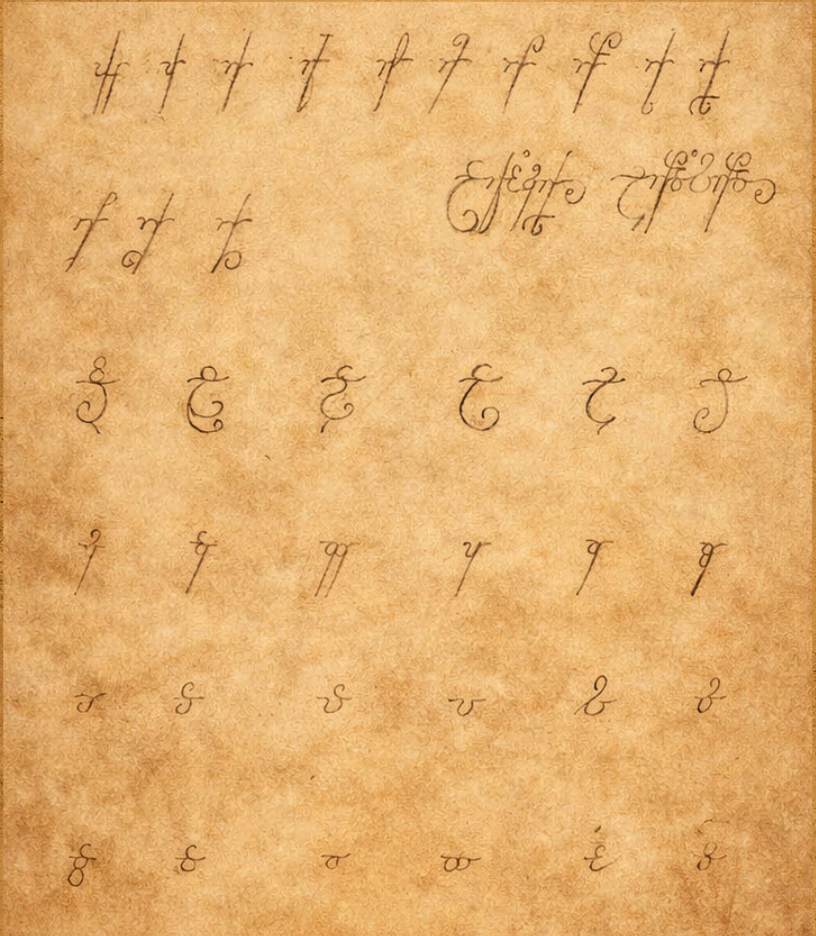

Beyond the phonetic surface of the language lies a deeper spiritual framework. Discover how these forty symbols map the journey from creation to decay in the full Kanar Exegesis.
Click the link below to experience
The Kanar Exegesis