


The Yara
A Prelude to Wings of Providence

The beginning and ending of the Batu is through music. We did not create the music of life; we are merely the notes within it. This the whole tribe knows. It is Damara who composes the music of our lives. It is she who first sings to our sisters and our daughters, giving them our yara. It is in this way that Damara enters the hearts of our mothers. Their hearts are the gateway through which thoughts create the world.
– Annan Anapa
I
The girl arrived early for the birth of her child. Cold still clung to the air as the sun crept above the distant mountains. Wet grass dragged across her black shins as she climbed Overlook Hill, the blades heavy with dew. She looked to the sickle moon waxing in a pale sky, the morning star burning close behind it. She greeted them both with a nod, as she had each morning they'd made this climb together.
Her eyes held the moon as her thoughts turned to the earth. She enjoyed the sense of solidity beneath her bare feet, each step an echoing drum that marked her passage upon the skin of the world. Every beat through the grass brought her closer to her waiting child.
Would it happen this morning?
Up ahead, she could make out over the hill’s rise a lone tree patiently waiting. The morning sun painted the acacia’s tall trunk and arching canopy with blushing colors. The girl’s black body cast a long shadow that stretched up toward the tree as she approached.
She took a seat at the foot of the tree and looked down over the mist-shrouded treetops. Solitude settled around her as she tried to imagine all the other mothers who had come before her – all of them sitting there in that same spot, beneath that same tree.
She grasped the amber amulet hanging from her neck, fondling its polished contours as her mind wandered. A gust of wind recalled her to herself, lifting the amulet to her forehead as she whispered the ritual words.
After a few moments, she sipped from the skin she had slung over her shoulder, her lips puckering from its bitter bite.
Resealing the skin pouch, she recalled the many warnings she’d been given. Drink too deeply and Damara may sing through you before your time. The risk was real, but her patience had worn thin over the last two weeks and she’d take whatever help the gods could give.
The breeze moved through the grass, shifting it in waves that rippled like an ocean in the dim light. A pang of loss – the salt and vastness of waters far to the west. She breathed through it.
When the first rays of the sun crested the eastern mountains, she knew it was time to try once more. She closed her eyes and took a deep breath. She emptied her mind of everything except the sounds around her, and she listened. The warm fingers of the reborn sun caressed her face as she listened with her whole body.
She felt the first signs of the drug taking effect, her senses sharpening to the slightest draft between the blades of grass. Through the leaves above. She could hear a whistling coming through the mountain passes, threading down through the trees and along every river of the forest below.
But she still didn’t hear what she came to hear.
Her impatience melted as she recited the ritual words once more, slipping deeper and deeper into the trance. She waited and listened. She would wait until the mountains crumbled around her if need be. But she would listen, and she would wait.
It’s there.
Her pounding heart threatened to drown it out, but she was sure it was there. She took deep breaths, steadying herself, and listened again. Yes, it was there. Though only a single note searching for its song. She hummed, coaxing the melody into being.
She breathed and the music breathed with her, each note settling into her body like a stone in still water. It spread throughout her as words began articulating themselves. It was happening. Excitement moved through her as she swayed into the melody. Her head nodding to the rhythm, she sang the yara loud and clear.
The trance deepened and she saw herself from above – seated beneath the tree with the stars glittering overhead. Thousands of them, wheeling about her. A warmth settled within her womb. The sound of her own singing echoed as if coming from far away within her own mind. She sang the yara over and over again, lost in a dream of music where she no longer existed.
Then something changed. She withdrew and came back to herself, listening. Then it crystallized — she was not alone. There was a pressing against the music from within, the way a thing cracks its shell before you see the break. The yara's egg. It split open, and the music spilled out in fragments around her. She heard her own singing as if from a great distance. For the first time, fear moved through her.
The sense of another’s presence intensified, but she didn’t open her eyes. She knew it wouldn’t be out there. The music grew louder. It drowned out her own singing. Had she taken too much?
The melody of the yara became painfully loud as she covered her ears. But nothing could shut out the avalanche of sound that no longer resembled music. Her panic mounted as a new sound emerged from the noise.
Who’s there?
Though faint at first, it soon came in a rush – the piercing cry of a newborn. She lowered her hands to clutch at the amber amulet around her neck, the cry wailing in her ears rising to an even higher register. Her eyes snapped open in terror.
Everything stopped — blown away on a gust of wind.
Her heart racing and lungs heaving, a cold sweat trickled from her brow and down her trembling jaw. Gusts continued rolling in waves within the grass around her, the day’s first light still climbing from behind the mountains on the horizon. All was deathly quiet and still, aside from the pounding of her heart.
She sat there breathing deeply until once more composed, attempting to soothe her fears. She’d been longing for this very thing. It’s what every mother of the tribe experienced. Her child had been born right there when she heard its yara for the first time.
No longer a girl, the young mother rose to her feet as she looked over the misty canopy of the forest below. She burned now with a new kind of anticipation as her thoughts turned to her husband there within the trees.
She lifted her amulet again to her forehead, then without further delay she followed in her own footsteps back down through the trampled grass. Descending the hill, she hummed the melody of her child's yara. It played on within her chest as the mist closed around her, no longer feeling the cold as she had before.
At the foot of the hill, she continued blind, unable to see more than a few feet ahead. But she had come to know quite well the forest that supported this new home of hers.
She followed the gurgling stream that skirted the hill's base toward the Dula River, whose voice she could hear threading through the western tree line.
Her toes gripped the worn smoothness of the struts under her feet, the damp bamboo lashed together to form a bridge spanning the small stream. She wondered at the countless others that must have walked that bridge over the years. So many lives crossing that very stream as they returned home.
Her life began in a land she’d never see again, but she wouldn’t speak of that. She’d been happy with her new life here, mostly. And now she had even more reason to hope as she entered the shadow of the tree line, humming the yara. Her thoughts were already in the hut with her husband, watching his face as she sang to him.
Stepping through the gateway tunnel cut in the jungle wall, the darkness of the interior swallowed her. No light reached the forest floor here, even at midday. But her feet knew the way, tracing the well-worn path with confidence.
Once through the tunnel the forest floor opened, barren – aside from the trees themselves, their massive trunks pressing close in the blackness.
From the upper reaches of the canopy she could already hear the forest coming alive with the music of waking. The symphonic squeaks, squeals, and whistles of feathered life; the staccato rhythm of chattering marsupials; the distant calls of the colobus – all of this formed the ever-present background of her new world here. Everything there strove for its patch of sunlight within the lofts of the trees.
Her hand brushed unseen trunks as she navigated the darkness, until she felt the shaft of a thinner bole hewn smooth. Memory provided the light her eyes could not, passing beneath a large platform of twined saplings, bound and lashed on pilings her feet used to navigate. On the platform above would be four circular thatched huts, the supply platform she'd passed a hundred times.
She found the pilon she searched for. Her fingers sliding up to the twine wrapped around it, she untied its knot to gently lower the bamboo ramp leading up to the platform.
She leapt up, forcing herself to stop so she could draw and resecure the ramp behind her. Practically skipping, she adjusted the strap of her skin pouch across her shoulder as she passed the four huts there in the dark.
Knowing precisely where to stop before slamming into it, the young woman came to the wall of a tree so large its trunk felt flat against her palm. The platform buttressed to this enormous tree, and stepping from it her feet easily found the invisible stairway carved there in its side. The narrow steps, worn smooth by countless generations, spiraled up toward the canopy.
Her left hand traced the trunk as she climbed, ascending as fast as she could. Higher and higher she climbed toward the morning music of the forest, just as her child’s yara continued to play out within her heart.
She soon felt the familiar burn in her calves as her vision slowly returned. The young woman entered a realm of misty twilight, branches appearing that the staircase now had to navigate. The intertwining mazework of limbs were alive with small shadows skittering through the swirling mist around her.
In her mounting eagerness she eventually abandoned the staircase for a popular shortcut among these branches. She climbed with fluid agility, her toes finding all the well-worn notches along her course.
Bird calls heralded her approach, followed by a hush close around her—though life's music continued unabated in all directions. Her own song rose again on her breath, its rhythm matching the movements of her climb.
She rose through pink shafts of light streaming now through the swirling mists, her strong arms hoisting her small frame into the canopy.
The last branch of her climb stretched just above the green crowns that formed a ceiling for the rest of the forest. The branch upon which she perched belonged to one of the four emergent trees that rose far above the rest of the jungle. But she had climbed as high as she would go.
Squatting there for a moment to catch her breath, she looked out across the vast sea of shifting leaves. Aside from the other three emergents marking the perimeter of the village, her view spanned far and clear across the canopy to the purple mountains in the east. The mountain range crouched there beneath a luminous pink sky. She stopped for a moment, face turned to the rising sun.
Taking a deep breath, she looked up to the engraved branch framing her view as it arched above her. The name was inscribed in Kanar, an ancient script she knew to predate the tribe itself. Though most villagers were illiterate, she recognized the wedged shapes that were so similar to those used in her homeland. Eyeing the glyphs set aglow in the new light, she didn’t need to decipher the signs to know their meaning:
Ephrathah.
The name of her new home mirrored the name of the forest itself.
Looking back over the canopy, she noticed a few trails of smoke rising like threads of mist through the treetops. They were coming from the morning fires of the village built within the branches just beneath the leafy veil. As she stood and stretched, she could spot only a few thatched tips of huts poking through the leaf ceiling of the village.
She turned from the view and walked along the large limb that dipped under the cover of leaves. She was aware of the depths on either side of the branch. She ran and leapt from it, swallowed by the darkness below. As she fell, her hands grasped the U-shaped branch she knew to be waiting there for her. Perfectly sized for her grip and sturdy, she swung in a wide arc to drop like a cat onto a sapling platform below.
The yara had awakened something vital within her. Every inch of her hummed with it, something ancient and enormous moving through her. But she looked back over her shoulder to the U-shaped branch above and knew it would be her last act as a child. She had to think of her child now.
Her husband became furious when he first caught her performing this stunt. Such foolish antics were for children, showing off and constantly trying to outperform each other. Fatalities from stunts such as these were not at all uncommon. He made her promise she wouldn’t do such things anymore, and she reluctantly acquiesced.
Until today.
As she moved along the sapling walkway, she sighed, smiling. She passed several sleeping huts as she looked up to the shroud of leaves floating in the breeze above, dappled light falling warm across her face.
Once again, the melody of the yara pulsed behind her teeth as she stepped onto a narrow rope bridge spanning two platforms. The bridge swayed between them by design, but she adjusted her balance to its rocking without breaking stride.
Her pace slowed as she stepped onto the new platform, her stomach gurgling as anxiety replaced excitement. Nerves settled over her as she approached an intersecting byway – an adjoining platform that supported four beehive-shaped huts. Each hut abutted the one next to it, forming a small chain called a hutment.
She turned down the byway, passing by her own hut to go straight to her husband’s beside it. Her hand took hold of the amber amulet around her neck as she rubbed it between her fingers, a nervous habit she rarely became aware of.
The opening of the hut faced east, the sun’s scattered light streaking in through a thin veil of leaves from above. She stood there in the entrance of his hut for a moment, her back to the shafts of sunlight as she cast a shadow over the sleeping form of her husband. She watched him for a moment, clasping her amulet in a sweaty palm.
She took a seat and washed her feet from a gourd just outside the entrance. She sang the words of their child's yara aloud for the first time since hearing it on Overlook Hill – no longer limiting herself to humming its melody. She sang softly at first as she finished cleaning her feet. But when she stepped inside the hut, she sang more fully as she removed her sarong of pounded bark.
Her husband stirred and looked up, shielding his eyes from the morning glare streaming around her.
“Luala? Is something wrong?

II
Mosai pulled himself up onto the thick limb as his eyes drifted over the incised glyphs, reading Ephrathah on the branch above him. He stood and steadied himself, adjusting the two gourds slung across his back. Ignoring the view of the canopy and distant mountains, he immediately turned and walked along the branch that lowered back under the cover of green.
The two yellow gourds attached to long leather straps knocked rhythmically across his back as he made his way to an adjacent limb just below. He stepped down carefully, and then again to another just below that as his feet found the comforting indentations of well-worn branch-steps leading down to the village platform.
The sight of the U-shaped branch suspended above hit him like a fist, triggering seething anger. But he swallowed the lump that formed in his throat and continued on.
Mosai could feel the eyes upon him as he made his way along the village skywalk, but he ignored them, knowing they’d be discretely averted if he attempted to meet their gaze. He was not one to welcome attention, so it proved difficult to stifle the annoyance this engendered. He told himself that they meant well and were merely concerned about him. But he didn’t really believe that. It felt more like children prodding a carcass with a stick, wondering where all the life had gone that once inhabited the now empty shell. He told himself that he didn’t really care what they thought. But he didn’t believe that either.
He walked within a world of his own and considered it a victory when he made it all the way to the easternmost point of the village without meeting a single eye or speaking a word to anybody.
Crossing over a long narrow bridge that swayed with each step, he came to another emergent and the circular platform that ringed its massive trunk. Once again, he adjusted his straps, the weight of the gourds digging into his shoulder as he began stepping up into the tree’s branches. He climbed the common route, choosing the sequence of steps and handholds that would require the least amount of thought.
The man emerged now from the canopy as the colossal tree rose up into the unfiltered sunshine, his pained eyes squinting in the sudden glare as he climbed. He paid no mind to the view, his thoughts being elsewhere and wanting only to get down to work.
But watching his footing as he stepped to a sun-warmed branch, and seeing the green expanse of the jungle canopy shifting in the breeze below, he felt something relaxing within him and he allowed himself to pause. Caught for an instant by the unexpected rising serenity, he closed his eyes and sighed as he welcomed the sun’s open embrace upon his skin. A moment’s respite from his burden was all he wanted. Or did he?
No!
He continued his ascent then with a fixed look of determination, the seed of anger once again taking root he followed the branch steps as they entered the cooling shadow of the platform above. He climbed without thinking, moving through the limbs that weaved between the trestlework of the platform’s substructure, no longer looking down but only up and ahead.
Mosai caught the sweet scent of burning cedar as he pulled himself up through the opening in the platform that circled around the tree’s trunk. The tree split into several diverging trunks at that point, creating the impression of thick rafters arching up and over the entire platform from its center.
There was only one small hut – the ceremonial hut – built near the hub of the platform. This was the men’s fire circle, which consisted of four separate fire circles circumnavigating the tree’s trunk.
It was a den of dappled green. Narrow beams of filtered light streamed through the leaf curtains suspended from branches on all sides. There was only a single break in the leaves, creating a window looking out onto the west. The bamboo platform itself was pierced by thick branches shooting up from below. The mix of solidity with the insubstantial created an incongruent impression – sturdy arboreal pillars randomly spaced to support an ephemeral roof of floating leaves.
Ducking under the diverging trunk, Mosai was relieved to see an unoccupied fire circle. He was also aware when the murmuring of the men quieted as he entered. Making his way among the limbs sprouting through the floor, he once again felt the weight of eyes upon him. When he noticed the flicker of flames in his peripheral vision, he refrained from looking over, hoping that would send a clear message he preferred to be left alone.
It was a great relief when he finally lowered the two gourds from his back. He hadn’t’ realized the full extent of his burden until he laid it down. Dropping his leather satchel beside the gourds, he sank to the floor with a sigh along the fire circle’s perimeter. It was unlit of course, and he would not need fire for some time yet.
He removed from his satchel a handful of cowrie shells, which he had cleaned with sand just that morning down at the river. Seeing the little cream shells again in his coarse dirt-grimed hands, he was overcome with unwanted emotion. Once more, he exchanged pain for anger.
Will this never let up?
The shells belonged to her of course. Of course. Things of beauty were not for him to own. Not anymore. He placed the shells on a flat stone he took from the circle and began smashing them with another, taking care that fragments wouldn’t fly free.
As the pain in his chest began to burn, he only ground down on the little shells all the more – grinding them into a fine white powder. It occurred to him that he should probably go get the mortar and pestle from the ceremonial hut, but just the idea of getting up and walking back past the other men kept him in his seat, grinding away with rock in hand. Besides, there was a vague sense of masochistic satisfaction he couldn’t deny that came from pulverizing the shells in such a crude fashion.
Her shells.
Part of him screamed out against the destruction of what was once hers. But he was driven by anger, and a larger part of him screamed out to smash everything that reminded him of her.
Mosai stopped, his chest heaving.
But once done, he set the powder aside and opened the top of one of the gourds, scooping out handfuls of bluish-gray clay. He’d spent a large portion of his morning collecting this from the clay banks. He’d taken his time, knowing he had to choose his material carefully. Proper foundations are critical.
You can’t rush beginnings if you want the work to last. You must take as much time as you need to find just the perfect ingredients before beginning to build. When he’d entered the cove along the Dula River, the alluvial embankment rippled with the tell-tale colors he’d been looking for. He knew it would be perfect, that this clay would dry correctly without cracking in the fires. Exposing your creation to the flame is the final stage and true test. But if you’ve done your job conscientiously, and with heart, it will pass through the flames of criticism and emerge stronger than ever.
Mosai scooped the clay out onto slabs of bark and began squeezing it through his fingers, carefully weeding out all the lumps and pebbles he could find. Having good raw material, it was then necessary to sift out all the contaminants that would later weaken the whole. Possibly even causing it to fall apart in his hands So he took his time, kneading the clay repeatedly to a uniform consistency.
Then, taking the ground up cowrie shells, he added the powder with the clay and mixed it in thoroughly with his fingers while continuing to make sure the clay remained free of unwanted material. Give it what it needs for strength, remove what weakens it. Couldn’t be more simple.
He was feeling better now. Focusing on the task at hand, he was trying to keep his mind in the present. With a chunk of clay, he began modeling a small bowl by pushing in and away with his thumbs. After a while he even allowed himself to enjoy the feel of the clay in his hands. Then, satisfied with the result, he set the bowl aside to dry and stiffen for a while.
That will be the foundation.
Removing more chunks of clay, he began forming ropes by rolling them beneath his palm on the lab of bark. He lined them up beside each other to make sure each rope he formed was slightly longer and thinner than the one before it.
A thick, strong foundation building up toward a thinner yet broader conclusion.
This took some time, and Mosai was surprised when he discovered that he’d been humming to himself. When he became aware of it, he stopped immediately and glanced around while his fingers continued rolling the clay ropes. He was relieved to find no one looking in his direction. If they had been, they hid it well.
He felt the drop of his stomach though when he saw Makoa over there among the other men, the men muttering amongst themselves round their little fire. Makoa – he was the only person left that Mosai felt at all close to anymore. He hadn’t been aware that Makoa was up here though and suddenly felt even more self-conscious. He hadn’t spoken to Makoa since –
It doesn’t matter.
Mosai forced his eyes back to his clay and to the job before him.
Just try to get through this and get it over with already!
Having finished rolling and measuring out the coils, he picked up the thickest rope that was laid out beside him and returned to the bowl he’d fashioned for the base. Wrapping the rope around the outer surface of the bowl, he pinched the two ends together. Then licking his fingers, he moistened and smoothed the seam until it was no longer visible.
He repeated this process, laying one coil atop another round the outside of the bowl, until after four ropes the top one was flush with the bowl’s rim. He then set it on a clean slab of bark and carried it over where the leaf wall opened onto the west.
The sun was past its zenith and was just now visible, shining through the leaves above as Mosai stood at the edge of the platform. He set his work down where the combination of sun and breeze would set the clay. In a short while he would be able to add more coils without it folding and caving under its own weight.
He seized the moment then to look out across his world. The village was mostly hidden within the trees, extending west from here to Overlook Hill in the south. Closer to him rose the other three emergent trees, shooting out of the canopy from the other corners of Ephrathah. They stood tall above the village like silent sentinels, each housing their own fire circles. One was for the jola – the village elders that guided the affairs of their people; one was for the amori – a third gender considered neither male nor female; and one was for the women.
Mosai glanced down at the few huts poking through the canopy below. He could hear the faint laughter of unseen children running and passing along the skywalks beneath the spread of leaves, reminding him of his newly acquired responsibilities. This placed an invisible weight upon his shoulders that almost caused him to stumble as he stepped back into the shade and sat down. He wiped the sweat from his brow and stared vacantly at the beginning of his work sitting on the ledge in the sun.
What am I supposed to do? I can’t do this without her. I can’t.
He looked at the clay foundation and tried to imagine what it would look like finished. He shut his eyes to block everything else out and focused on the work ahead of him.
What shape must it take?
He pictured the coils being built atop each other in ever-widening loops until it resembled a ribbed egg with its tip sliced clean off. Like an empty eggshell. A vessel actually, standing knee high and as wide at the top as the length of his forearm. The expanding curve of the coils must be gradual and graceful.
Like she was… This will be her new body.
Eyes still shut, he focused on imagining the shape of the intended vessel, backlit by the shining sun. Within his mind’s eye the silhouette began to move. This will be her new body. The old one – nine moons ago it was… but this was now. Now it will be a pot. An empty shell. Something to poke at with a stick. No, not empty. There are things to be placed in it.
Things? No! I can’t do this.
The silhouette. Nine moons ago. Her body was there. It was real. The sun wrapped around it. Not like it is now. Now it’s just a vessel… or will be. No, back then it was flesh. Real. She had come to him. She came to him singing. He was awakened by her singing. The morning sun was so bright, it blinded him. He had raised his hand to shield his eyes from the glare.
“Luala?”
She was singing to him back then. Nine moons ago. She was in his hut, not in hers. And she had woken him up for some reason.
“Is something wrong?” he asked.
She was so beautiful. Backlit by the morning sun. She was removing her sarong, and when it fell to the floor it dawned on him what she was singing. He could tell by the cadence that it was a yara. That really woke him up. He had risen onto his elbows as she came to him. He lifted the hide without a word and welcomed her as she slid under and pressed up against him.
Luala continued singing to him, and for his part Mosai just leaned back and listened, struggling to maintain some control. Soon he began to pick up a few words and began to sing the yara along with her. It was such a beautiful morning, nine moons ago. They were holding each other as husband and wife for the first time that morning as they sang their child’s yara.
Mosai was brought back then to the present by a warm breeze rustling through the leaves beside him. He opened his eyes and found himself swimming in an ever-changing kaleidoscope of yellows and greens. Two jays were dancing among the branch rafters of the men’s fire circle, chirping their love songs as if no one else existed.
Mosai looked over to the silhouette of clay sitting there in the sun. And without daring to think anymore, he stood up and went back to work.
It was late afternoon by the time he finally finished layering up the coils of clay on top of the foundation he had made. Having just added the last thin strand comprising the rim, Mosai sat back to evaluate his work.
She’s going to be fine.
It had taken a while getting to this point though, having had to stop a few more times along the way to allow the clay to set before applying more weight. The constant stopping was the hardest part, but he had the shape of it now. It even looked symmetrical and sturdy. He was more than a little surprised that it turned out so well. It had been a long time since he had to make a boma.
He couldn’t avoid the word anymore. Not when he was looking right at it. It was Luala’s boma, the funerary vessel that would carry her on to the underworld.
Turning away, he reached for the second gourd he had brought up with him. Pouring water over the remaining clumps of clay, he mixed it in until it formed a creamy paste. He then caked both hands with the paste, smearing it over the surface of the boma. With gentle caresses, he ran his palms around it, filling in the gaps between each rib and smoothing them over as he removed the excess.
Having the basic structure in place, Mosai was taking his time as he went back over his work to fill in the gaps. Smoothing away the rough spots. It’s all part of a process that had been handed down to him by his father, and his father’s father before him.
As a warm breeze began to build and circulate through this space, it brought with it the perfumed scent of honey suckle – pungent and sweet.
“Dablak!” he cursed under his breath.
He fought to suppress the rising anger, steadying his shaking hands against the clay. The aroma seemed to come as a deliberate provocation. It was her scent, of course. She had worn it frequently and deliberately to entice him, and it had always worked. It was a common enough scent among women, using the nectar extracted from the red flower, but still…
Why does everything have to bring me back to her?
His eyes narrowed on the clay as he forced his thoughts and hands back to their work. The warm clay was nice, like mud slipping between his fingers. His hands slowly stroked the bulbous curve of the boma, so smooth and warm. Just like–
His hands suddenly jerked away from the boma, pounding hard on the bamboo platform with both fists. He wanted to smash the damn thing right there. He wanted to pick it up and hurl it off the platform in a screaming rage.
But he suddenly felt the silence around him and felt the eyes upon him again as well. His head and shoulders slumped as he began rapping his hands against the floor, demonstrating that he’d only been trying to shake loose the dry clay stuck to his fingers. He even summoned the strength to begin humming aloud in a casual way as his trembling hands scooped up some fresh clay and went back to work.
His hands reached out to the boma, tentatively running along its supple curves. Everything reminded him of her. The aroma of honeysuckle, the feel of warm smooth skin. No, not skin. Clay. But it had been skin nine moons ago. She was teaching him their child’s yara. They were singing it, back then. Singing it together.
Once Mosai had begun to pick up the words, her hand slipped down under the hide to find him aroused. She was so brave, but he could also feel the faint trembling of her hand around him.
They both found their courage together in the yara, singing it as he rolled over to position himself above her. Luala’s voice began to quaver just a bit as she guided her husband. This was their first time together. They’d agreed to wait for the yara. It became difficult for Mosai to focus, unable to keep singing in time with Luala. His voice cracked and he began to feel lost. He was off. It wasn’t going well, and to his horror he found that he forgot the words to the yara he had just learned. His mind was blank and his whole body froze. He felt the coming panic, swimming in confusion. He tried to listen to Luala’s singing, but he couldn’t find his way back to it. Worse, he was unable to move. He was failing. He was failing her.
Then he felt her fingers touch his face, and he looked down into her warm eyes. He’d never seen them look that way before. Not like that. No one ever gave him so much with one look as she did in that moment.
Her lilting voice sang in a slow, measured way. As though they had all the time in the world. His eyes stayed with hers then as he slowly relaxed and began to find the words to sing once more. He breathed deep her honeysuckle scent as his body began to remember its way as well. Their eyes never parted as they made love, both singing their child’s yara as they invited the new soul into being. Inviting it to come join their family.
Before long, Mosai heard other voices joining with theirs. At first it was just his grandmother’s – Wanyana’s voice singing through the thatched wall adjoined to his. But it soon passed from one hut to another, spreading until every hut on their platform was singing their child’s yara. Everyone within earshot was awake and had learned the words. They were all welcoming the new soul – inviting the new child to come and join their tribe.

III
The body needs its spirit.
Mosai wiped the clay from his knife and examined its edge before leaning back in to continue the engraving. He was adding the finishing touches in the clay to a python he’d incised there coiling around the base of the boma. The snake was a common symbol of renewal and regeneration due to the continual shedding of its skin.
Death encircles us all in the midst of life and rebirth.
The boma itself represented the world tree, the axis mundi that bridges the four realms of existence. Gao, the giant serpent coiling around its base, supported the foundations while guarding the passage to Alodia, the underworld.
Having finished the snake, Mosai wiped the knife clean again and braced himself for what was next. The body needs its spirit, and the spirit was contained within the yara. Luala’s yara. He had always thought her yara was the sweetest he'd ever heard, but he didn't want to hear it now.
This isn't about me.
His hands moved to their work without him. He knew the glyphs well. He was one of the few who did. However, being able to understand and utilize the glyphs of kanar was not a source of Pride with him but a simple fact of his family heritage. Made to study kanar from an early age, he never chose it for himself, nor really appreciated it until this very moment. For as much as he was dreading this part, he was glad he didn't need to solicit help in executing it.
He took great care as he began crafting the wedge shapes of the glyphs around the rim of the boma, for it was there that the clay was most thin and delicate. He was a little surprised though that evoking Luala’s Yara wasn't as painful as he'd anticipated. The light-hearted music of her spirit poured free and easy from his mind, along through his hands and onto the boma.
He opened himself up and let the Yara do its will.
“I've never heard you play with such feeling before.”
No, not that one. I don't think I can go there. “You haven't been paying attention.” The memory of his own voice came unbidden.
It was a different world then. Everything was different. He had been a different man, though it was less than a moon ago.
“I've never heard you play with such feeling before,” Luala’s voice echoed once again from the past.
Mosai wiped his knife off with a sigh, then once more went back to work.
No, it wasn't long ago at all. Yet it seemed a world away. It was less than a moon ago that he'd been waiting patiently for her, though she didn't know it. He had known she would come there to the river at some point in the afternoon, and it wasn't long before he heard Luala’s singing approach from the forest.
She hadn't seen him when she emerged from the forest trail, but he was there watching her every move. She came softly from the shadows, wary eyes scanning the river's edge. He watched her slip off her sarong of pounded bark, letting it drop to the ground. He looked upon her beautiful black skin glistening with perspiration as she approached the shoreline.
“Bahiya…” he had muttered to himself.
It was almost a moon ago, yet he could still see it so clearly as it replayed itself now in his mind. Luala, standing there at the river's edge, had been looking down to her distorted reflection in the swirling mirror. She turned, giving it her profile to better judge the enormity of her now distended belly. Her breasts had been swollen, and he knew how sensitive they were as they rested atop the extraordinary bulge of her abdomen. Her hands began caressing her own belly's Contours as she marveled at the comical figure in the reflection.
The heat had been particularly oppressive that day. A smothering humidity that, with her condition, made it inevitable that she'd eventually turn up there. She entered the cool river, wading over in Mosai’s direction to a sheltered sink in the shade of the gwarri tree – its large, gnarled roots extending out into the river.
She released an audible sigh of relief as she lowered herself into the pool between the tree’s roots, the crisp waterline of the river kissing every inch of her as she passed beneath its surface. She squirmed a bit to find a comfortable position, nestling in upon the slippery smooth stones of the riverbed. It must have been quite a blessing to have that extra weight she'd been carrying all those months suspended now by water.
Mosai watched with fondness as Luala cupped her hands and poured cold water over the top of her taut belly, rising from the river like a steppingstone. The cool runnels trickled tracks down across her stomach, now stretch to a golden brown. She began to hum their child's yara while continuing to pour cool water across the warm shield of her womb. Occasionally she would caress her belly or drum upon it with her fingers, a smile spreading across her face as she disappeared within herself.
Bahiya.
Mosai was now about midway round the rim of the boma with the inscription of her yara. He couldn't repress the smile that made its way to his face as he relived his sense of mischief from that day. She seemed so relaxed. He just couldn't help himself.
Her whole body had jolted with fright when he finally revealed himself within the branches of the gwarri tree above her, playing a few high-pitched whistling notes on his kulu. She twisted with a splash, craning her neck to the branches above. Her alarm was then replaced by annoyance.
“Mosai!” Luala slapped at the river.
She made a pathetic attempt to fling water up at him, but he took no notice. Perched within a cloud of leaves and purple berries, he let his leg dangle from the branch above her head as he went on playing his kulu.
“Don't do that to me!” She slapped the river again and looked away.
Blowing gently now into the notched end of his kulu, Mosai began to play Luala’s yara.
Knowing how she enjoyed hearing him play it for her, he was counting on that now to set her at ease once more. But she continued staring off into space with a silent pout. He then tried a variation on her yara, blending it in with his own as his fingers danced lightly over the four holes bored into the kulu. Made from the hollow bone of a vulture, the kulu produced a surprisingly full tone for such a thin pipe, and Mosai was well-practiced.
He began to blend in the child's yara then as well, weaving all of their melodies in and out of each other. He thought of this blend as their family yara. He was getting caught up in the music as it flowed through on its own, surprising even himself where it took him.
Luala finally looked up with a scowl. He stopped abruptly, dropping then like a shadow down the trunk. Stepping into the water, the river took him between his legs. His bones drank in the chill with relief. He crossed to where she remained sitting and stood above her, Luala’s delicate face turned up toward his. He took her small chin in his rough hand, gently brushing her cheek with his thumb. Luala shut her eyes and took a deep breath, and when she let it out, he could feel all the tension in her went with it.
I wish I knew how she does that.
Mosai took a seat in the pool facing her, his legs on either side of her as he sat and probed her spotless eyes. She suddenly seemed self-conscious and a little nervous. She looked away and around, but after a long awkward silence she looked back to her husband once more.
“That was nice,” she said Softly. “I've never heard you play with such feeling before.”
“You haven't been paying attention,” he replied.
The memory of that day by the river was warm and comforting for Mosai and did not sting as he thought it would. He’d been immersing himself in the details of the memory as he stuffed her boma with damp leaves, more there in the past than in the present. And even as he set the boma aside while he started the fire, much of his mind was still stuck there in the past replaying that day within the shallows of the Dula River.
He didn't know how long he'd been sitting there like that, but the fire was dying down now, and he reached for the boma that had been drying beside it. Keeping back from the blistering heat that still emanated from the fire circle, he took his time removing the leaves – the drying of the leaves designed to draw out the moisture in the clay.
Setting the boma within the embers now, the remaining moisture created a light mist as Mosai sat back to watch the result of all his labors. He was waiting for it to crack and fall apart.
Mosai looked down at his dry, cracked hands, thinking that when he's done here, perhaps it would be better if he just went away – disappeared. Everything he touches gets destroyed. He flexed his fingers, hating the very sight of them, as if his curse resided there alone. His eyes drifted back up to the boma, and he waited.
Sitting in the pool of the Dula River on that hot afternoon with Luala, she had taken his hands in hers and placed them on the firm, round hill of her stomach rising from the water. His callous hands followed the sweeping contours of her bulge, slipping under the water to her popped belly button, then back up along the top, washing her with the cool river. His hands didn't seem cursed then, as he touched her and they're unborn child.
But look at her now.
Mosai stared at the boma for a long time as the embers beneath it cooled and died. Eventually, when it was cool enough to handle, he removed the vessel from the fire circle to examine it thoroughly. He saw no obvious flaws. He wiped it clean with a bit of water and pounded bark, testing it here and there with taps of his finger. He put his ear to the still warm surface of its bulge as he closed his eyes and tapped on it from the inside, listening to its resonance.
“It was kicking a moment ago when you were playing,” Luala had said, glancing to the kulu dangling from his neck. “I think maybe it could hear you.”
Back by the river, Mosai had taken up his kulu again and began to play. He was playing the child's yara, but Luala shook her head. He played hers, but still nothing. Finally, while playing his own yara, Luala smiled and nodded to indicate the child was kicking again. Mosai stopped and put his hands to her belly but couldn't feel a thing.
“Try again,” she said.
Mosai played his yara once more, but when Luala nodded that it was kicking and he stopped playing to reach out to her once again, he felt nothing. Mosai looked at Luala out the corner of his eye as if being duped – as if she were now getting even with him for frightening her before.
“It stops kicking when you stop playing,” she said.
Mosai began to play once more, this time lowering down into the water as he rest his ear against the taut drum of his wife's stomach while he played. Luala beamed, resting her hands atop his head as he felt and heard the thuds of a kicking child. Mosai stopped.
"Womika," he gasped, looking up to Luala in amazement. "It's alive!"
"Well, I should hope so." Luala giggled uncomfortably, her belly shaking with laughter. "We have a spirited child who..." She shifted her sore buttocks around the slimy stones within the water then, searching for a more comfortable niche, "...who seems to dance to its father's tune."
He put his ear back to her warm stomach again and began to play. This time he began soft and easy, letting it build on itself as things he had buried within slowly leaked out. And as the child began to thump, Mosai's playing came all the more keenly, whistling through the air. Luala looked down on her husband and unborn child, her fingers running along the braided plaits of Mosai’s hair.
He looked up and saw her gazing into the amulet of amber that hung around her neck. He'd never known her to be without it, and it seemed forever linked to who she was. Lifting it in her fingers, she caressed its smooth contours with a small frown. She was looking upon it now as if seeing it for the first time – as if only now seeing the beauty of the life within yearning to be set free.
“I think it's time,” she said, still looking at the amulet in her hand. “I think it's time I departed for the great mother.”
Not without me.
“I'm with you,” came a man's voice.
The voice jolted Mosai back to the present.
Removing his ear from the boma, Mosai turned in alarm toward a man with a long rippling scar slashed across his left eye. It was Makoa crouching there beside him, placing four small gourds on the floor between them. The man also set down four reeds, then rose and walked back to rejoin the others around their fire.
Mosai stared at the hollowed calabashes and the bright colors of the pigments they contained. After a few moments he set the boma down beside them and picked up one of the reeds. He looked at it for a moment, twirling the shaft between his fingers as he waited for something.
He wasn't sure what he was waiting for. Was it inspiration? No, he knew what he was going to paint. And the painting would be the final touch to Luala’s boma. Not merely an affectation, the painting had to represent the specific beauty of a particular person, linking the painting with the deceased.
But his mind wasn't on the work at hand. He was thinking about his friend, Makoa. The man who always seemed to be there when he needed him most. He'd saved Mosai’s life on more than one occasion and was the only one to support him when Mosai fought for Luala. His friend had at first tried to talk him out of it like everyone else, but once Mosai made up his mind, Makoa was the only one to stand by him. He was also there at the end when Wanyana came to him...
Let's just finish this.
Mosai dipped and stirred his reed in the gourd containing the green pigment. It was just one of the four pigments he would be using, each color representing one of the four villages that made up the tribe. But the green of Ephrathah would be Luala’s primary.
As Mosai went back to work dipping and tracing the paint with the reed, he focused mainly on keeping the design centered on the boma's belly, between the python carved at its base and Luala’s yara round the rim.
It didn't take long to get the basic outline of the moth he had in mind. The moth was a symbol he would forever link to Luala and the amulet she had always worn around her neck. She had never spoken of it openly, but he suspected there was some personal history attached to it that came with her from her former life. He’d never seen an amulet like it on his travels, but he now had the moth that was associated with it locked within his memory. And he would prefer to keep it there than to look upon it now. The day he last saw that moth would forever remain the worst day of his life.
Makoa had been with him then too. Sitting around a small fire, the two men had been making music while they waited, Mosai on his kulu and Makoa plucking on his bira – a bow harp with four strings drawn tight from neck to soundbox. It had been an early evening with rolling clouds of charcoal churning in a dark blue sky, the wind just beginning to growl across the flats.
They sat alone around their fire within the open space of an expansive mudflat; their field of vision completely empty of everything in all directions. Empty of everything except the black tower of a giant baobab rising from the dry cracked earth a fair distance behind Makoa. Known as The Great Mother, this baobab was the tree from which every member of the tribe was born. Everyone from all four villages arrived into the world through the womb of The Great Mother.
Mosai’s eyes hardly strayed from the tree's dark outline as he played his kulu, the silhouette of the baobabs set against a stormy sky. Though well back and away from the two men, the black monstrosity still loomed above them both. A tangle of black branches, looking more like the sprouting of roots from its top, gave the tree an odd impression of being planted upside-down. On its far side, well out of view, would be the threshold to the birthing chamber – a large hollow within its massive trunk.
Mosai’s mind hadn't been on his music. The wave of events was finally catching up with him, threatening to drown him. He had spent his life trying to avoid or escape the burden of his family heritage, and now his conscience was bothering him. Now that he was on the verge of passing it on to his...
But it could be a girl.
Was that what he wanted? Mosai was torn, but there was nothing he could do about it either way. His life had never been his own. And now... now he couldn't even hear or feel the child’s yara he was trying to play. He caught Makoa's one good eye, glowing and studying him there in the orange light of the fire as he put down the kulu.
Back in the present, Mosai took up a new read, dipping and stirring it into another calabash, then began to add the distinctive red circles to Luala’s moth. One large circle on each of the four wings, like bright red eyes staring out at him from the boma.
We're almost there.
Reaching for the gourd containing blue pigment now, his mind slipped back into memory before he even picked it up.
“Someone is coming,” Mosai had said.
He was back on the mudflats, standing up as Makoa laid his bira aside. A shadowy figure could be seen against the darkling sky, heading their way from The Great Mother. Mosai could tell by her movements that it was his grandmother, Wanyana, taking her time as she approached their small fire.
The wind had been howling by then across the dark sweep of the mudflats, growing stronger as it blew sparks from the dancing flames of their fire. Makoa rose to stand shoulder to shoulder with Mosai, the wind at their backs whipping the knotted locks of their hair across their faces. Wanyana stopped several paces from them, as if not wanting to step into the light.
“Grandmother?” Mosai called out over the wind.
Wanyana entered the circle of light then with something clenched in her hand, but Mosai ignored it, expecting her to be carrying something else. Where was his child? Why did she come to him without his child?
“Is something wrong?” Mosai asked, taking half a step back. But when she didn't answer right away his eyes blazed like hot coals in the light of the fire, fists clenched tight. “Answer me. What's happened? Why do you come to me in silence and empty handed. Where's my child?”
“Your son is feeding, Mosai,” said the old woman.
Mosai let go of the breath he'd been holding in his lungs, muscles relaxing as tension drained away in sudden relief.
“Son?” he whispered, a crease forming between his brows as he stared down into the flapping flames of the fire. The dark cloud upon his face cleared then as a small grin began to unfurl. “My son.” Turning to Makoa, he gripped the arm of his friend beside him. “Did you hear? I have a son.”
“Yes, I heard,” said Makoa, though his eyes remained fixed on Wanyana.
Mosai was looking back down into the fire though with a distant look in his eyes. “I will always remember this day as the greatest of my life.”
“Mosai,” said Wanyana.
But he seemed not to hear her. He was lost in his own thoughts as he continued staring into the fire, a shadow once more passing across his face. “Do you think he could be the one?” he muttered, half to himself.
Makoa's scarred face turned his way. “Now is not the time to discuss it.”
“But– “
“Mosai!” Wanyana called again.
He looked over to his grandmother as if just remembering she was there, noticing something hard in her expression. She had her arm extended, her hand holding something out to him. He reached for it without thinking but then checked himself.
Something is wrong.
“Take it,” said Wanyana.
He hesitated for a moment longer before finally taking it. It was Luala’s amber amulet. He held it up as it spun by its beaded necklace, casting golden shards of light from the leaping flames below.
“What is this?” Anger was beginning to edge his voice now.
“She wanted her son to have it.”
“Then why give it to me?” he shouted. “What is this, old woman?”
“Luala has passed on to the next world.”
“No... You lie! You said... You said my son was feeding.”
Mosai threw the amulet to the ground and made to go to the baobab, but Wanyana moved to block his way.
“You can't go in there, it's forbidden.”
“Get out of my way, old woman. I want to see my wife.”
“She's no longer in there,” Wanyana said with ice. “She's gone.”
“You lie. I’m tired of your lies. You said my son was feeding.”
“Another with milk is feeding him. There’s always another on hand in case... In case of complications.”
“No. It's not true,” said Mosai. “I don't believe you. Get out of my way!”
He began to struggle with Wanyana to push her aside, but she wasn't giving in when he felt the powerful grip of Makoa’s hand on his shoulder pulling him back.
Mosai’s chest was heaving, his mind slamming back into the present with the lingering memory of Makoa’s hand still on his shoulder. But then he realized his friend's hand really was on his shoulder, Makoa squatting down now beside him in the men's fire circle.
“The worst is behind you,” said Makoa, looking to the finished boma sitting on the bamboo platform in front of them. “Every day gets better from here. You're a father now with a lot yet to look forward to.”
Mosai kept his eyes fixed on the boma, the vessel he had fashioned with his own hands to carry the object of his love away from him forever.
“No. Nothing matters anymore.”

IV
It was cooling off fast as the sun began to sink behind the distant mountains. Mosai took his time though, making his way above the growing mists as he climbed Overlook Hill. He noticed the wanning crescent of the moon above set within a deep blue sky, the evening star chasing close behind.
He looked down to the grass he was wading through, and the tree waiting alone as silent witness on the crest of the hill. He carried Luala’s boma in his arms as the two gourds slung across his back knocked in time with his steps.
Reaching the top of the hill, he avoided the west side of the tree, painted with the blood of the dying sun, and passed through its shadow to the east. He continued on as the hill began to slope down again to the tree line at its base. He found the hole he had dug for her earlier that morning, there in the gloom of the tree line.
Mosai set the boma and two gourds on the ground beside Luala’s hole. He sat for a moment, staring into the opening – black in the fading light. He could hear the dark laughter of the Dula River, coming through the tree line. He looked over the few bushes that blossomed nearby her hole and was comforted by the variety of flowers between them. His father, mother, and... others.
She'll be in good company here.
Pulling over the nearest gourd, Mosai reached in and carefully lifted out the large, reddish-brown sack of Luala’s liver and placed it in her boma. He did the same with her kidney and heart as well.
“Filled with the remains of yesterday,” he recited, scooping up handfuls of dirt from her hole, “we add the seeds of tomorrow.” He then poured the soil in the boma over Luala’s organs until they were covered.
Dragging the second gourd over beside him, he lifted out a skull painted a bright red. He held it in his lap looking down into the black pits of her empty sockets for some time, tracing a callused finger along her orbital ridge. He then lifted the skull, holding its forehead to his own.
“Bahiya...”
He set it reverently in the boma atop the soil. “Filled with the remains of yesterday,” he continued, taking a handful of seeds from his satchel and sprinkling them in the boma, “we add the seeds of tomorrow.”
Lifting the boma down into her hole, he then began to fill them both with soil. As he scooped the dirt up in his hands and buried his wife, he had trouble breathing and his throat threatened to swell shut as he sang her yara for the last time. When it was finally filled, he sat back and took a deep breath, looking to the red glow of the sky above the tree line.
You're in the ground before the sun. Go with Jumara, Luala. Follow him and let him guide your way on the straight path to Alodia, I will find you there when I can.
Having already sung her yara for the last time, he then took up his kulu and played it for the last time as well. Her yara flew light and easily across Overlook Hill on the evening breeze. He couldn't bring himself to stop, and he continued playing long after the sun had set. The cold indifference of the stars was there above him and would listen without caring for as long as he could play.
When the music finally ran out of him, he slumped before her mound in the still of the dark. The whole world was silent.
Eventually, something lifted him to his feet, and he found himself making his way back down the hill toward Ephrathah. But as he descended Overlook Hill and reentered the blanket of mist below, it seeped so deep and cold into his bones, he knew he would never feel warmth again.

If you felt the rhythm of The Yara, your journey into the world of Batu has only just begun.
The first note has been played, and now the epic saga
continues in
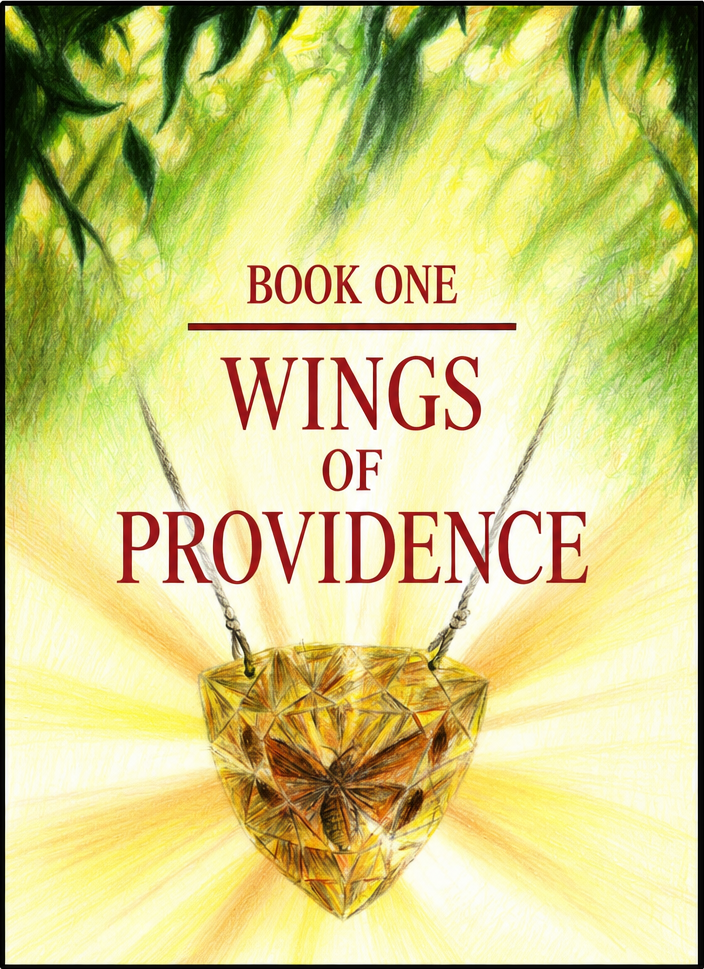
The Exclusive Fable: Wings of Providence
The First Three Chapters of Book One: Skip the wait and find out what happens to Luala’s and Mosai's newborn son right now.
Join the author's inner circle today.
In exchange for your email, I will
immediately send you: