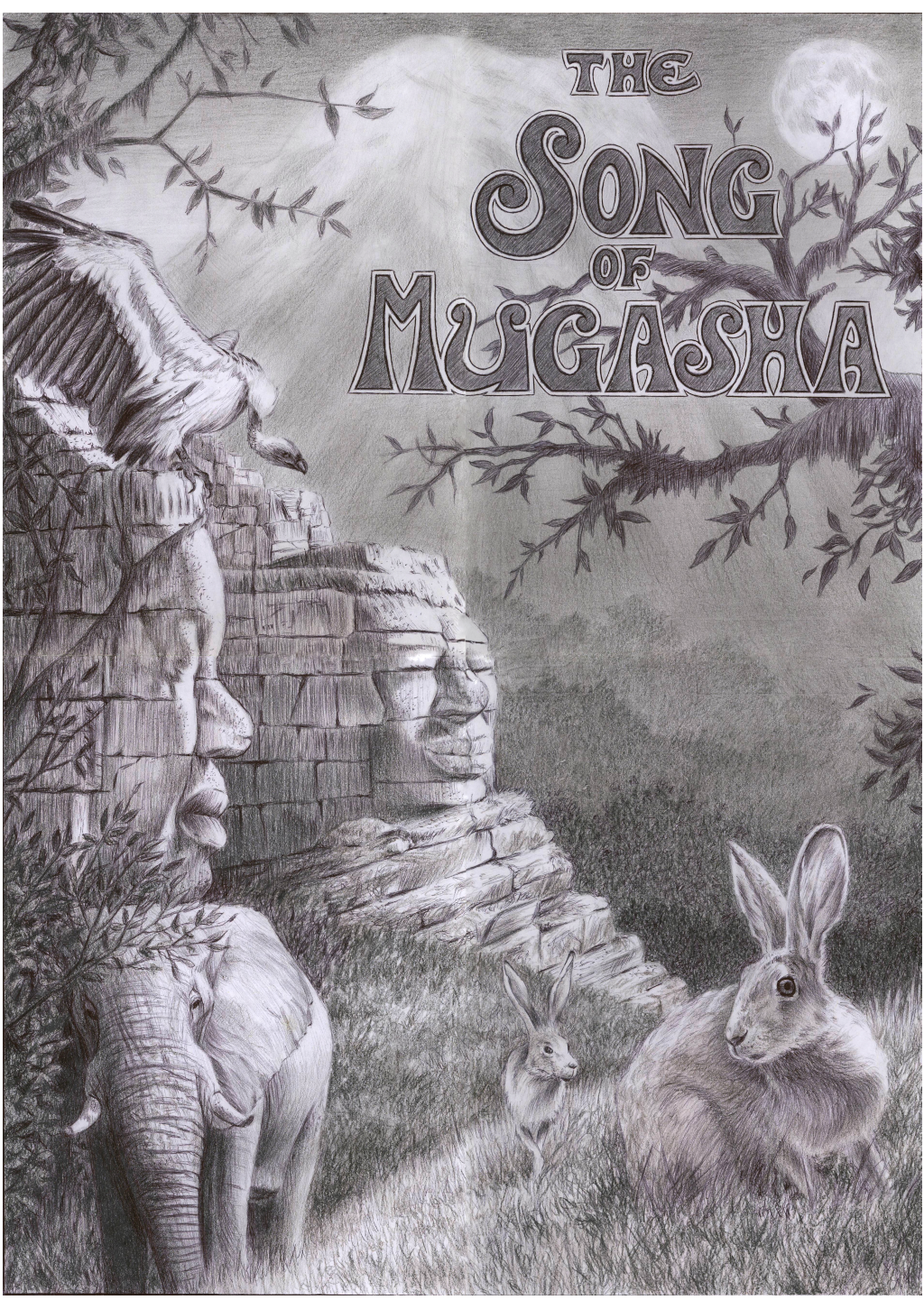
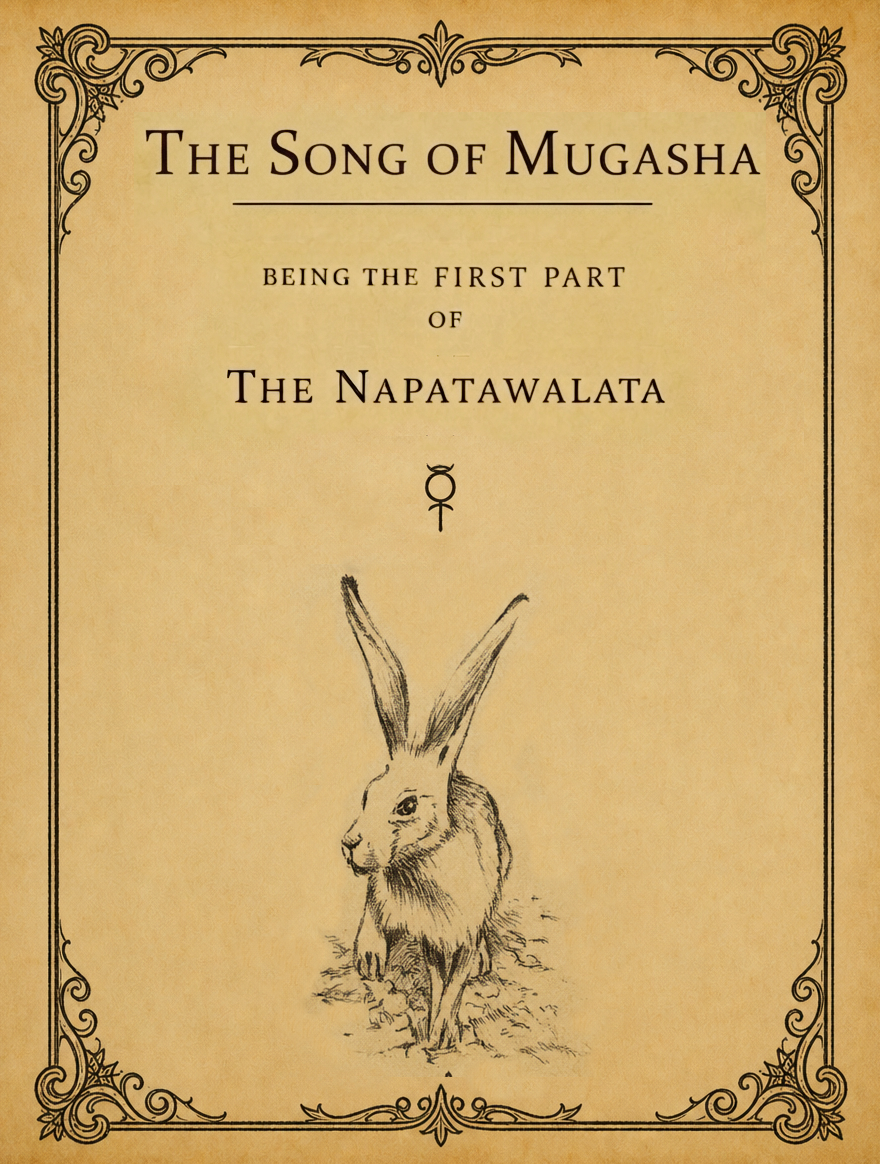

LONG AGO WHEN THE world was young and the gods and the myths of old still walked amongst the creatures of the world, and when the most fabulous events you’ve ever heard of were still quite common, there existed a large but humble population of hares in a secluded valley known as The Land of a Thousand Hills.
Cut off from the rest of the world and walled in by mighty mountains, The Land of a Thousand Hills was an ocean of green that covered the valley floor in buckling waves of grass as far as the eye could see. A glistening network of rivers and rivulets weaved among the rolling hills, setting apart every grassy slope with their fluid threads in a vast, intricate web.
Among the hares that made their home within The Land of a Thousand Hills, The Great Hare was the most distinguished among them and ruled as their chief for untold generations. The hares of that region were known far and wide as The Children of the Hills, and The Great Hare himself was known throughout the land as a wise and intuitive leader. Many legends suggest that The Great Hare was in fact a seer, whose counsel was not merely taken by his own kind but was widely sought by every creature of the land. Indeed, his reign often referred to as the Golden Age, when The Children of the Hills were most bountiful, living in security for many a generation due to the leadership and wisdom of The Great Hare. It was during this age of peace and prosperity that Tapu came into the world.
Another characteristic of the Golden Age is that every hare at that time appeared physically identical, all being of similar build and totally without color. All the hares of the world were as white as fresh fallen snow. Tapu, however, was the runt in a litter of twelve, merely one of many sons born from the seed of The Great Hare. Tapu was so small he lacked the weight to push his way in among the many hungry mouths of his larger brothers and sisters, none of whom being willing to relinquish access to their mother so he might nurse. Some tell the story that his mother refused to intercede on his behalf because the small hare did not measure up in her eyes as a likely heir to The Great Hare and was ashamed to have produced him. But it may also be, as many maintain, that she simply failed to notice Tapu’s birth at all.
All the does belonging to The Great Hare were on the lookout for their chief’s successor, for the Great Hare was growing older and would not live much longer. Each mother held within the privacy of her heart the secret hope that she might be the one to sire the next Chief Hare. And even The Great Hare himself was watching the recent litters quite carefully, having received certain signs that his heir was indeed near at hand. Thus, it was that there existed in this time an added climate of unspoken competition amongst the does which might hinder a mother’s otherwise perfect eyesight. So, it is quite conceivable that a leveret of lesser stature could have been overlooked in such times.
If he had been born of proper weight like his brothers and sisters, Tapu would no doubt have grown and lived out his days as any other Child of the Hills. But being faced with death from the moment of birth, he was forced by necessity to develop an unusual set of skills from the very beginning. So, it happened that in those first days, driven as he was to the brink of starvation, Tapu came to play his first trick. A simple trick that would save his life.
Having overheard a warning to stay clear of the euphorbia bush with the yellow-green flowers, whose berries were known to cause warts, Tapu received a sudden flash of inspiration. Weakened with hunger but moved by desperation, the little hare went straight to the euphorbia, picked several of its infamous berries, then carefully wrapped them in one of the shrub’s oblong leaves.
It was well after nightfall by the time he found his way back to his mother’s form and was relieved to discover there by the light of the full moon that she and his larger siblings were all fast asleep. Seizing the opportunity, the little hare crushed the berries within the large leaf and was careful to avoid getting any on his paws as he used it to smear the berry juice all over his mother’s belly.
When he had finally finished, he fell to the ground weak and exhausted from his labors. Sleep was overtaking him fast as he laid there gazing up at the shining moon. And he could have sworn, with his last waking thought, that the moon itself was smiling down upon him as it caressed his glowing white fur in the soft, cold night.
He woke the next morning as his brothers and sisters began to stir around him, all turning toward their mother to feed. And if they happened to notice that there were twice as many nipples to suckle than the day before, they made no sign of it but simply took to the nearest for their morning meal. Tapu, however, was more discerning in his choice since he knew to look more closely to distinguish between the nipples and the warts.
From that day forward the little hare was able to nurse on a regular basis, while his siblings remained ignorant of their situation and received the nourishment of their mother’s milk at random, depending on their luck of choice. And so it was that the rest of the litter remained below full weight while Tapu alone grew larger every day until weaned, at which time he was the strongest and most healthy of them all.
Little is known of Tapu’s youth from that point on, though much is guessed at. There are many outlandish tales from this period that are often attributed to him, but none have ever been satisfactorily substantiated. And it should be noted how the elements in most of those tales conflict with one another to such a degree that it strains all credulity to believe the same hare might figure in them all. It may be safely assumed, however, that Tapu’s early years were filled with the usual misadventures on would expect in the development of the greatest trickster the world would ever know; because the next time he appears solidly within the sons of history, he is already in full possession of his legendary wiles.
As time wore on The Great Hare began to feel his usefulness fading fast. He felt his bones grow heavy, pulling him toward the ground. He could no longer run as he once had.
“My days are like the declining shadow, and Ii am withered like grass,” said The Great Hare.
He knew that his time to depart for Alodia had finally come upon him, even though his heir had yet to be revealed. So, that evening in the stillness of dusk, The Great Hare summoned al The Children of the Hills to announce that his moment of departure had come at last. He sat upon a large stone atop the highest hill of the valley within the last light of the dying sun as all the hares within The Land of a Thousand Hills gathered around him. They all came to listen to their Chief Hare one last time. The Great Hare looked down upon the throng dotting the hillside – a patchwork of white as far as his eyes could see, thousands of fur coats blowing within the dark grass beneath the budding stars above. His heart swelled with pride at the sight.
“O Children of the Hills,” The Great Hare sang out, loud and clear. “My flesh faileth and my time to depart has come, though my heart will forever remain and dwell among The Land of a Thousand Hills. But the hour is late and my time is short, so let every hare with ears hear me now one last time.”
Sitting upright, The Great Hare looked out at the crowd with ears erect and nose twitching in the wind. “Though each and every one of you are my legacy and the living monuments that I leave behind, my legacy as you Chief shall be carried on by the heir that has yet to be revealed. I have seen ahead to the thins that have yet to pass, and I have seen the prince that shall rise from among you to take my place.”
A great murmur then spread across the hill as each hare expressed their relief at this news.
“But hold, for this is not all that I have seen,” said The Great Hare, stamping his large foot upon his perch to regain their attention. “I have also seen a great shadow that will fall upon The Land of a Thousand Hills. A shadow that will bring death and destruction to all the Children of the Hills. A shadow from which no hare can outrun, and from whom none may hide. It will fall to my heir, the one who is yet to rise from among you, who will remove the shadow and preserve The Children of the Hills from this terrible fate. Among all my offspring who would aspire to be Chief Hare, my mantle will fall to the one who retrieves the golden mimosa found growing upon the highest peak of Mount Kunama. For only this flower of resurrection will have the power to lift the shadow of death that has yet to fall across the land. But beware, for whoever undertakes this quest will come to face Jabwe herself – the vulture of death – who guards the passage that leads to where the mimosa grows. Yet this must be done, or all is lost. I cannot do this myself, for my time has passed. Thus, I now depart for Alodia and remove myself so that my weaknesses might not add to the burdens of my people.”
A hush of shocked silence fell across the hill as The Great Hare then hopped down from atop the large stone. The sea of hares silently parted for their Chief as he passed amongst them without another word. All eyes followed The Great Hare as he descended the hill and kept heading west until disappearing along with the setting sun. The Great Hare was never to be seen again within The Land of a Thousand Hills, though his spirit continued to be felt there forever.
The silence of the throng persisted, each withdrawn into their own thoughts and fears about what they had heard. But they gradually began to disperse as darkness fell upon them, returning to their forms and trying as best they could toward off the cold of night that now seeped into their hearts.
At first dawn the sons of The Great Hare held their council where it was decided that they must set out for Mount Kunama at once in order to retrieve the mimosa spoken of by their father. And though doubt and fear plagued each and every one, the promise of glory and the needs of their people compelled them into action.
All except for Tapu. Tapu alone refused the call of The Great Hare’s prophecy. For he alone among all the sons of The Great Hare held no desire in becoming their Chief Hare. He looked upon the quest his brothers were embarking upon as an errand of folly, pointing out that it was an impossible task, and that none may face Jabwe and survive. He scoffed and shook his head as his brothers departed on their journey that would surely lead them all to their deaths.
“Let every hare be master of his own fate,” argued Tapu as he watched them leave westward for Mount Kunama.
After his brothers departed for Kunama, Tapu retreated from the heat of the afternoon sun to rest within the shade of an almond tree. Comfortable and at ease, it wasn’t long before the hare fell fast asleep there at the foot of the tree. Tapu had not a care in the world and slept the whole day away within the cool shade of the tree. But in his sleep, Tapu received a vision – a vision within his dreams of the most beautiful doe he had ever seen.
Tapu had never even heard of a doe like this one in his waking life. She radiated light, like the sun itself. Instead of being a pure white hare like all the other Children of the Hills, this doe glowed with a soft golden light. Tapu fell in love with her at first sight. It were as if she were fashioned for the sole purpose of making him fall in love, which was not surprising since this was his dream. But somehow, he knew she was also much more than a dream.
The golden doe appeared to be lost – or trapped – wandering aimlessly within a dark forest, unable to find her way out. Tapu could see her hopping through the undergrowth, scared and forlorn, but he could not reach her. Indeed, it were as if she were a dream within his dream. Unable to engage with the poor beautiful doe, he could only watch helplessly, and his heart went out to her in her plight.
Then, coming to a small glade within the forest, the golden doe entered the moonlit clearing and gazed up at the face of Jukun in the night sky.
“Please… O mother Jukun, please help me,” she sang to the moon in a sweet voice that almost broke Tapu’s heart. “I have been lost for so long. Please, don’t leave me here. O Jukun, hear your daughter in her need. Please, O please help me.”
Every hair on Tapu’s body was screaming to race to her side, but he was just an observer in this dream and had no body to reach her. He called out to her, but she was unable to hear him. Yet she must have finally sensed his presence, because she began looking around into the shadows of the glade until her eyes were pointed right in his direction. She froze, looking Tapu’s way with wide staring eyes and ears laid flat. Then she suddenly bolted away through the undergrowth, her golden light vanishing within the darkness of the forest.
Tapu cried out for her to come back. He wanted with all his heart to help her, but she was gone.
When Tapu awoke it was already dusk with the first cold stars emerging within a darkening sky. The hare combed his ears as he rose up on long hind legs, his twitching nose held above the grass to smell the wind. Looking about, his eyes fell upon the honey-colored moon that was slowly rising from behind the eastern mountains. Still feeling stupid with sleep, Tapu was hypnotized by the golden face of Jukun as the images from his dream began to flood back into his mind.
It didn’t’ take him long to realize what he had to do. He had to catch the moon and ask Jukun for her help in finding the doe from his dream. He knew in a way that he couldn’t put words to that the golden doe was more than a dream. She had to be real.
So, the hare began to climb the almond tree, seeing now how the moon appeared to be caught within its dark, branching arms. Tapu clawed his way up higher and higher, working his way out within its tangled limbs. He climbed and he climbed, as high as he dared, until he felt he could almost touch the face of Jukun herself – snared there as she was within the black, bony fingers of the tree.
Revered by all the inhabitants within The Land of a Thousand Hills, the lunar goddess, Jukun, was often sought for her counsel by those in need. And though she normally imparted very little warmth to her supplicants as the cold light shone against the dark forces of night, no this night she glowed with a golden light that filled Tapu with burning hope.
But as Tapu crept further and further out on the thinning branches they shook under his weight, allowing the moon to slowly slip free. In desperation, Tapu sang out to Jukun, pleading for her to come back as she continued to rise into the night sky. He sang to her his song of need. He sung of his dream – of the golden doe and her woeful call for help. He sang to the moon with all his heart, pleading with the lunar goddess for her counsel in this matter.
“Give up this foolishness,” answered Jukun. “What is the golden doe’s plight to you? Let every hare be master of his own fate. Are these not the words you spoke before?”
“Yes, but I feel the golden doe in my fate,” said Tapu. “And she shall be placed within my constant soul.”
“There is more to his doe than meets your eye, little prince.”
“I don’t understand.”
“You love what you do not know,” said Jukun, shining down upon Tapu. “But then, you aren’t what you think you are either.”
“What is there to know?”
“You’ll find out. You always get the adventure you’re ready for. The quest is a manifestation of your character.”
“Will you help me?”
“Or destroy you, it depends on your point of view,” said Jukun. “Her name is Fana.”
“Fana…” Tapu whispered.
“Yes. She is the light of the jungle, though she herself remains lost in darkness. Lost within the western forest – within the shadow of Kunama.”
“Kunama…” Tapu looked to the black outline of the western mountains, and to the largest one there rising far above the rest. His ears twitched with nervous tension. “So far…”
But because Tapu had helped free her from the branches of the almond tree, Jukun sent her herald, Nok – a giant owl who flew silently out of the night and swept up Tapu in a single large claw. Plucking the hare from the tree, Nok carried Tapu high above The Land of a Thousand Hills – carrying him over the sleeping world and on into the west.
“Where are you taking me, O spirit of the air?” Tapu asked, watching the moonlit hills pass below with wide staring eyes.
“I am Nok, the elemental agent of Jukun. I am to deliver you on your way to the forests of Kunama.”
So, Nok delivered Tapu to the forest edge, setting him down before a rope-bridge spanning a wide river. The river served as a barrier separating The Land of a Thousand Hills from the forests and mountains of the west, and there was no other way across except by the bridge.
Tapu gazed toward the distant shore, seeing nothing but pitch-black as the bridge’s ropework stretched into darkness. All he could make out of the slumbering forest were black spires thrusting up into a starry sky.
“Take care as you go, little hare,” said Nok. “Let not the illusion of peace deceive you. The wood is home for many a thing best left undisturbed – dark things, with eyes and ears that never sleep.” The giant owl then took to the air without a sound and was gone.
Tapu took a few hops out onto the rickety bridge, then paused to tase the wind with a twitching nose. He eyed the rigging of ropes and bamboo beneath him with apprehension as the dark river flowed below with barely a murmur. The Children of the Hills were nocturnal creatures – they were used to making their way by moonlight, slipping through the night in silence like Jukun herself. Yet, Tapu felt uneasy now as he hopped across the bridge. He was crossing over into the unknown, the parting words of the great owl still lingering in his ears.
As he came to what he sensed to be the middle of the bridge, Tapu stopped short when he detected a shift of shadows on the bridge up ahead. His body tensed as he rose onto his hind legs with raised ears and staring eyes. A form was emerging from the darkness, hopping his way. But Tapu soon sat back on his haunches and exhaled through his whiskers when he realized it was just another hare approaching.
The hare was a fair-sized buck with a shining pelt, much like his own. They both drew near slowly, touching noses together as they silently probed and sniffed one another. The hare was handsome and had the scent of good health, but Tapu knew he had never smelled him before. This hare was a stranger.
When the two hares were done sizing each other up they sat back and studied the ropes and bamboo beneath them. It was obvious that the bridge was going to be too narrow for hares of their size to pass one another.
“I need to get across,” said Tapu.
The other buck just sat and gazed at him, his ears erect.
“I have come a long way to reach the western forest,” Tapu explained impatiently. “I need to get across, and you are blocking my way.”
“I also need to get across,” said the stranger. “I am on my way to graze upon the grass of the eastern hills and you are blocking my way, too.”
Tapu bared his teeth in anger and licked his lips as he began scuffing his paws upon the bamboo struts beneath him. “Listen here, you lop-eared fleabag,” Tapu growled. “I am on an urgent quest. You can cross and feed to your heart’s content after I have crossed over.”
“What is this quest?” asked the other hare. “What purpose leads you to the western forests?”
“My business is my own,” spat Tapu, lowering his head with splayed claws. “Move back from the bridge. I have the right of way here.”
The stranger crouched on his haunches and growled in return: “Every way of a fool is right in his own eyes.”
Overcome with anger, Tapu launched into the other hare without even thinking. The two bucks fought then with snarling fury, nipping and clawing like mad as they struggled to push each other back. It was tough going for them both, fighting also to keep their balance upon the narrow bridge that swayed with their movements. And it eventually happened that when Tapu finally cuffed the other hare hard enough to knock him aside, the stranger screamed in panic as he began to slip off the bridge – his claws scrambling for purchase.
There came a hiss from the river below where Tapu now saw the gleaming eyes of a crocodile string up at them. The monster’s milk-white teeth seemed to glow in the light of the moon as its jaws stretched open beneath the helpless hare dangling from the bridge with wide eyes and dilated nostrils. There was just enough room now for Tapu to pass on by and cross over to the western shore.
But instead, he dug his claws into the bamboo struts beneath him as he grabbed the other hare by the scruff of the neck in his long teeth. Tapu pulled with all his might, dragging his adversary back up onto the bridge. The crocodile hissed in protest below.
Tapu sat back in exhaustion, ears laid flat as he rubbed his forepaws across his nose and cleaned the blood from his whiskers. He watched the other buck lick at a ripped and bloody ear dropped across his face.
“You save my life,” said the other hare.
“It would not have needed saving if I hadn’t attacked you,” answered Tapu. “Besides, we would both be fools if we allowed our pride and anger to feed that monster below.”
The other hare only nodded in agreement. “My name is Damu,” he said, licking blood from his lips.
“I am Tapu.”
“I owe you my life, Tapu. I know the western forests well, and many of its dangers. I will be your guide until my debt of blood is repaid.”
Then without another word, Damu turned and began slowly hopping back the way he came toward the western shore. Tapu hesitated only a moment before following him into the dark.
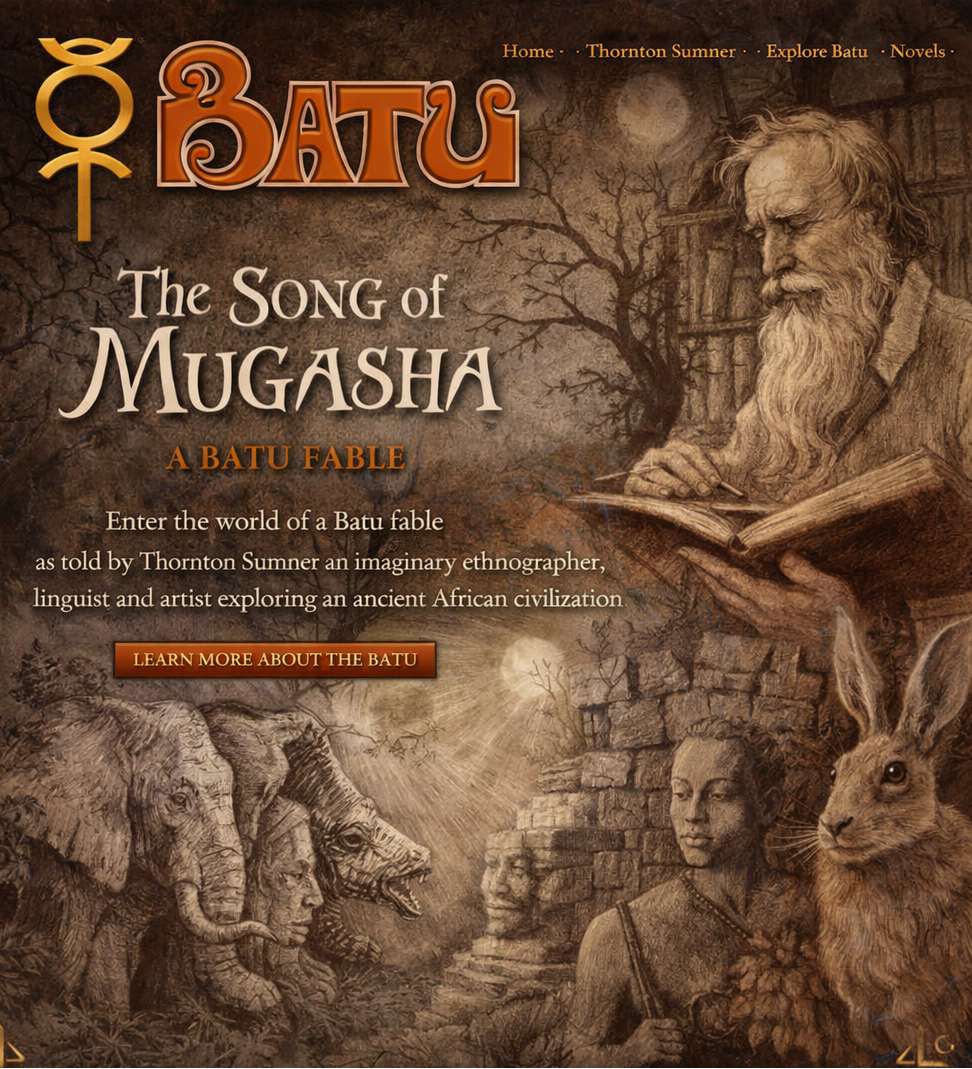
The Song of Mugasha is currently under revision. Stay tuned for the upcoming completion of this first part of the Napatawalata.
To read the complete second Part of the Napatawalata in its entirety, click the link below.